When you argue constantly and there's no reason.
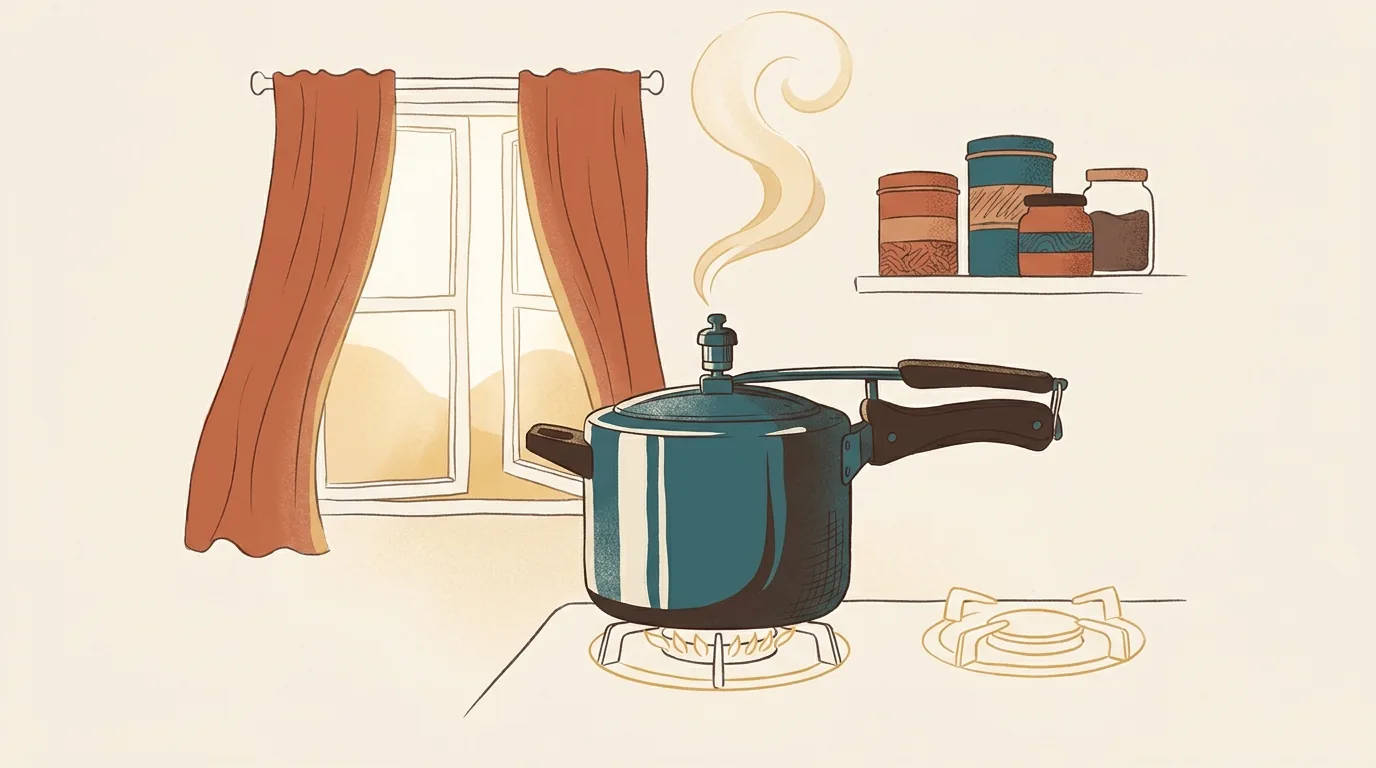
It started with a wet towel on the bed. By the time it ended, twenty minutes later, it had been about his mother and her job and the money and something said at a wedding two years ago. Then the silence, the two of you on opposite edges of the mattress, and the sentence one of you thinks and the other says out loud: "We are always quarrelling, even though there is no specific reason."
We hear that sentence, in those words, more than almost any other. It is usually said with a kind of bafflement. You love each other. Nothing dramatic has happened. And still the house runs on a low hum of irritation that flares three or four times a week over nothing at all.
Here is what we would say if you were sitting with us. There is a reason. It just isn't the thing you are arguing about. And a reason you have not found yet is a very different thing from a marriage that is failing.
If you need help right now
If you or someone you love is in immediate danger, call 112.
- Tele-MANAS — 14416 or 1-800-891-4416. Free, 24/7, in Kannada, Tamil, English and other Indian languages. Run by the Government of India.
- Women Helpline — 181. Free, 24/7, for anyone facing violence at home. Run by the Government of India.
- AASRA — +91 98204 66726 or 022 2754 6669. 24/7.
- iCall (TISS) — +91 91529 87821. Mon–Sat, 8am–9pm.
- Vandrevala Foundation — +91 9999 666 555. 24/7.
This article is not a substitute for speaking to someone.
Why do we keep arguing when there's no reason?
Because the reason is not inside the argument. Constant arguing in marriage is nearly always one argument, about one thing, wearing a different costume each time. The towel, the geyser, the late call: each is standing in for something neither of you has said out loud, and until that thing is named, any small thing can carry it.
Our own page on counselling for couples describes "the same argument coming back in a new costume", and we wrote it that way because it is what we see most. Two people can go years believing they fight about everything, when they have only ever fought about one thing.
That is good news, though it rarely feels like it at eleven at night. One argument can be found. Everything cannot.
Is it normal to argue in marriage?
Yes. Two people who share a bed, a bank account and a kitchen will disagree, and a marriage with no disagreement in it is often one where somebody has stopped saying what they think. What matters is whether the same argument keeps returning, and whether the two of you can find your way back to each other afterwards.
In our experience the couples to worry about are the quiet ones. You have stopped fighting altogether, which feels calmer but worse. You run the house well and barely speak. If you are still quarrelling, you are still in it, and that is something to work with.
What are the fights actually about?
Under the small fights in most marriages here sit four things. Feeling unseen. The household, and whose parents' rules it runs on. Tiredness with no time left for each other. Roles that were assumed rather than decided. The towel is about one of these. So is the geyser.
| The fight that happened | What it was standing for |
|---|---|
| A wet towel left on the bed, again | "I do everything in this house and nobody notices" |
| His mother rearranged the kitchen during her visit | Whose home this is, and whose rules it runs on |
| She took a work call at nine on a Sunday night | "Is there any time left in this marriage for me?" |
| The geyser was left on all morning | Money, and who lies awake worrying about it alone |
| Who forgot the milk | A job that was never actually given to anyone |
Feeling unseen. "I provide for everything and I am there around, and life still doesn't seem easy." We hear it from husbands and from wives, and it is usually true. The thanks that came easily in the first year went quiet somewhere in the third. Nobody decided to stop. It stopped.
The household. In Bangalore a marriage often shares a roof, or a lane, with parents. The kitchen has two sets of rules. A visit of two months changes who decides what for two months, and nobody says so. The fight about the rearranged shelves is the fight about whose home it is.
Tiredness. A six o'clock standup with a client in Seattle. A commute from Whitefield that takes two hours on a bad day. A child who wakes at three. "He or she is always bored around me" is often two exhausted people who have nothing left for each other by nine, and read the emptiness as rejection.
Roles nobody decided. Who calls whose parents on a Sunday. Who manages the maid, the money, the school WhatsApp group. Most of it was assumed from the houses the two of you grew up in, and those were two different houses. The second of the four things our own marriage runs on is this: roles matter, and intention matters more.
Why do small things turn into big fights?
Because the small thing stands for the big one, and because the way the fight runs has become a habit. One of you presses the point. The other goes quiet or leaves the room. The pressing gets louder, the quiet gets colder, and after a few years the habit fires faster than either of you can think.
Early in our own marriage, the way we spoke to each other when we were upset was doing damage neither of us intended. We were not fighting about anything terrible. We were fighting badly. A tone, a word chosen in a hurry, a look across the room. It took people outside the marriage to show us, first a counsellor before our wedding and later the people who mentored us through our hard seasons. Thirteen years on, the first thing we believe about marriage is that communication builds it, in words and in tone and in what the body says while the mouth is being polite.
The habit usually has two halves. One of you cannot sleep until it is settled. The other cannot speak until there has been an hour of quiet. Each reads the other's need as an attack, and so the one who needs to settle it follows the one who needs an hour, and the hour never comes, and neither does the settling. No subject can end a fight shaped like that. Only the shape can.
Can a marriage survive constant arguing?
Yes. Of everything couples bring us, this is among the most workable, because constant quarrelling means two people who are both still in the marriage and still reacting to each other. The two of you do not need to become different people. The one argument underneath needs to be found, and the way you run it needs to change.
We cannot promise what your marriage will look like in a year. What we can say is that in our experience there is always something under the quarrelling, and that once it has a name the fighting has somewhere to go other than the towel. We have written separately about whether marriage counselling works, with the research and its limits, if you would like the longer answer.
How do you stop the same fight from coming back?
Find the argument, give it a name, and have it on purpose instead of by accident. Pick a quiet hour rather than the minute after the towel. Say the real sentence, the one under the complaint. Agree what each of you will do when it flares. Then give it a fortnight, because a habit with years behind it does not change over a weekend.
Write down the last three fights. Beside each, write what it was about underneath. Do this separately. If the same word turns up three times on either list, you have found your argument.
Say the real sentence. "You left the towel again" is a complaint, and a complaint can only be defended against. "I feel like the only adult in this house" is the sentence under it, and that one can be answered.
Decide what happens when it flares. A word between you that means "not now, but tonight". An hour's pause that is a promise to come back rather than a door shut. The one who needs to settle it gets a time. The one who needs quiet gets the quiet.
Learn how the other person receives care. Gary Chapman's The Five Love Languages changed something in our own marriage, and we use it with nearly every couple. He was washing her scooter every Sunday as love. She wanted twenty minutes of talk after the children slept. Both felt unloved, and both were loving hard in a language the other did not speak.
Decide the roles. Sit down once, when you are both calm, and decide the things that were assumed: whose parents, the maid, the money, the Sunday calls. Most of the fights about milk disappear when somebody actually owns the milk.
If you would like help choosing which questions to ask each other, the ones about how you each speak when upset were written for engaged couples and work just as well six years in.
When is it not just arguing?
When one of you is afraid. Raised voices and hard words are arguing. Threats, hitting, throwing things, or a knot in your stomach on the way home are something else, and joint counselling is not the first step for them. Please call 181 or 112, or take our free call alone and we will point you to the right help.
Nobody will ask you to sit in a room with someone you are afraid of. And if the fights leave you ashamed of yourself rather than of them, that is also worth saying to someone, on your own, before anything else.
What does counselling do about constant fighting?
It finds the one argument faster than you can at home, and it gives you a room where the real sentence can be said without the fight starting. Before the first session you each complete the Prepare/Enrich assessment separately, and the report shows where your answers pull apart. That gap is usually the argument. Most couples can name it by the third session.
Both of us are in every session, and we work in Tamil and Kannada as well as English, online or in person in Byrathi. Nothing is recorded and nothing leaves the room. After the assessment comes a block of at least five sessions, ten to fifteen days apart, because the fortnight in between is where the new shape gets practised. We have set out what counselling costs and what shapes it separately, without a price list.

Here is a pattern we see often, described as a composite rather than any real couple. Married five years, two children under six, he on a night shift for a client in the US, she back at work in Electronic City. They fight every evening between seven and nine, about homework, about dinner, about the phone. They arrive saying they argue about everything. The assessment surprises them: they agree on almost everything. What it shows is that neither of them has felt appreciated in two years, and neither has said so. The argument, once it has a name, is "nobody sees what I carry". No session fixes their schedule. What changes is that they start saying the sentence to each other, and the fights at seven stop being about homework.
Common questions
Why does my husband, or my wife, start fights and then blame me? Blame is what a fight looks like from inside it. Both people usually believe the other one started it, and both are partly right, because the real argument started long before tonight. If it feels like more than a pattern, if you are made to feel that you are always the problem, say so on the free call. You can take it alone.
Is it a bad sign that we never argue? It can be. A marriage with no disagreement in it is often one where somebody has gone quiet, and quiet is harder to work with than quarrelling. If you run the house well and barely speak, that is worth a conversation of its own.
Can we fix this without counselling? Many couples do, and the steps above are where we would start. What counselling adds is speed, and a room where the real sentence can be said without the usual fight starting before it is finished.
What if only one of us thinks the fighting is a problem? Start alone. You can take the free call by yourself, and either of us can meet you on your own. One person changing how they run the argument changes the argument, and the other partner often joins later.
Will you take sides? No. We are not there to decide who was right about the towel. Our work is to help the two of you find what the towel was standing for.
Where to begin
Tonight, separately, write down the last three fights and what each was about underneath. Do not show each other yet. Tomorrow, over coffee, compare the lists. If the same thing is on both, you have found your argument, and you can start having it on purpose.
If you would rather have company for that, read about how we work with couples, see who we are, or book the free 30-minute call. It is confidential, it costs nothing, and you can take it together or alone.
You are not quarrelling over nothing. You are quarrelling over one thing you have not found yet, and finding it is work the two of you can do.
Written by Pradeep Mcwin (M.A., Marriage and Family Counselling) and Gomathi Mcwin (Diploma, Marriage and Family Counselling), who have practised together in Bangalore for over five years and have been married for thirteen.
This article is for information and is not a substitute for personal counselling. Every relationship is different. If something here sounds like your situation, start with a free, confidential 30-minute call.